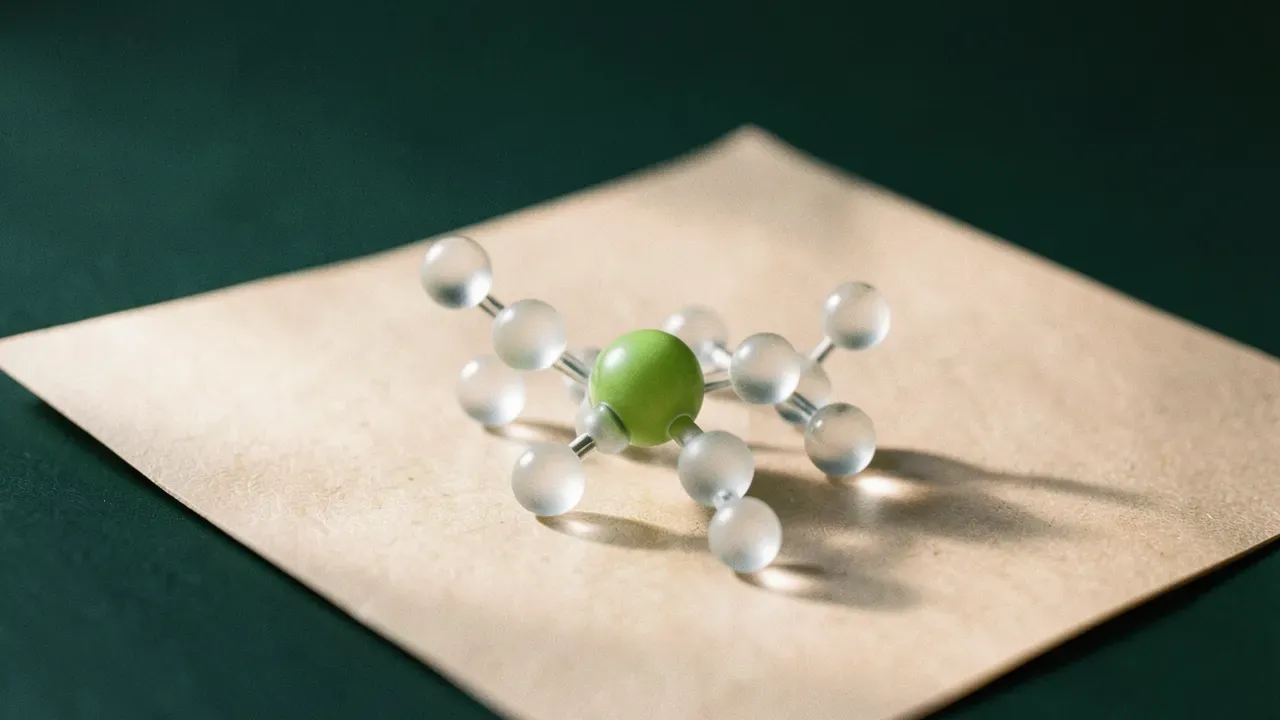
A comparison of BPC-157 and TB-500: origin, sequence, proposed mechanisms, preclinical models, limitations of the evidence and what to watch for when reading the literature.
A comparison of BPC-157 and TB-500: origin, sequence, proposed mechanisms, preclinical models, limitations of the evidence and what to watch for when reading the literature.
Read article
Quality
5 min read
How to read a peptide study: 10 questions
A practical framework for reading scientific papers on peptides: model, sample size, control, dose, outcome, limitations and independence of evidence.
Read article
Basics
5 min read
Peptide glossary: 30 terms for understanding
A glossary of peptide terms: amino acids, peptide bond, analogue, agonist, HPLC, MS, COA, RUO, half-life and more. Explanations in English.
Read article
Legal framework
4 min read
Peptides and WADA: what is prohibited in sport
An overview of the status of peptides on the WADA list: which groups are prohibited, why the list is not the same as a list of medicines, and how to check a specific compound.
Read article
Quality
4 min read
Russian label and batch documentation: what to check
How to read a Russian peptide label and batch documentation: batch number, catalogue number, salt form, purity, laboratory and traceability.
Read article
Basics
3 min read
Why Russian peptides? Tradition and quality
The Russian peptide school has a long tradition. What origin in Russia means, how to judge quality, and why “Russian” alone is not a guarantee.
Read article
Basics
3 min read
Peptides and steroids: key differences
Peptides and steroids differ in structure, mechanism, regulation and risks. An explanation of why they should not be equated and where misconceptions arise.
Read article
Quality
4 min read
How to recognise counterfeit peptides: 8 signs
Counterfeit peptides are a serious problem. Check the price, certificate, packaging and the supplier's communication, and learn to recognise the red flags.
Read article
Legal framework
4 min read
Peptides in Croatia: legal framework and import
How Croatian and European legislation treats peptides, what research use means, when a product is a medicine, and what to watch for when importing.
Read article
Metabolism
2 min read
AOD-9604: a growth hormone fragment and metabolism
AOD-9604 is a fragment of human growth hormone (176–191). What studies show about lipolysis, body composition and why clinical results are mixed.
Read article
Quality
4 min read
Storage and reconstitution of peptides
A laboratory protocol for storing lyophilised peptides, preparing solutions, calculating concentration and preventing degradation.
Read article
Sleep
3 min read
DSIP and sleep: what does the research show?
Delta sleep-inducing peptide (DSIP) is an old neuropeptide often linked to sleep. A review of the evidence, limitations and questions for researchers.
Read article
Quality
4 min read
HPLC and mass spectrometry: peptide purity
What do peptide purity figures mean? An explanation of the HPLC chromatogram, mass spectrometry, water and salt content, and the limits of analytical methods.
Read article
Immunity
3 min read
Immune peptides: LL-37 and thymosin alpha-1
What immune peptides are, how they are studied, and what research actually shows about LL-37 and thymosin alpha-1. With the limits of evidence and the regulatory context.
Read article
Quality
4 min read
How to read a certificate of analysis (COA)
A practical guide through a peptide certificate of analysis: what information it must contain, what purity, identity and batch mean, and what the signs of a poor COA are.
Read article
Longevity
3 min read
Epitalon, Thymalin and DSIP: Russian gerontology
A critical look at the Russian gerontological school: Epitalon, Thymalin and DSIP, the pineal gland, telomerase and the limitations of the available evidence.
Read article
Neuroscience
3 min read
Semax and Selank: Russian nootropic peptides
An overview of the Russian neuropeptides Semax and Selank: origin, proposed mechanisms, studies on BDNF and anxiety, and the limits of clinical evidence.
Read article
Hormones
3 min read
Ipamorelin and CJC-1295: GH secretagogues
How GH secretagogues work, how Ipamorelin, CJC-1295 without DAC and GHRP-6 differ, and what studies show about growth hormone.
Read article
Regeneration
3 min read
GHK-Cu: the copper tripeptide in skin research
GHK-Cu is a complex of the tripeptide GHK and copper. An overview of research on collagen, elastin, wound healing and the differences between cosmetics and research use.
Read article
Regeneration
3 min read
TB-500 and thymosin beta-4: tissue regeneration
What TB-500 is, how it differs from thymosin beta-4, and what preclinical research says about actin, cell migration and healing.
Read article
Regeneration
4 min read
BPC-157: what the research shows
An overview of preclinical research on BPC-157: proposed mechanisms, healing models, limitations of human data and the questions that should be asked.
Read article
Basics
4 min read
What are peptides? A guide for researchers
Peptides are short chains of amino acids with diverse biological roles. This guide explains structure, mechanism, types, research limitations and the importance of purity.
Read article
Starting points
Start with five starting points.
If you are new to peptides, we recommend these texts. They explain the basics, quality, the legal framework and how to read the literature — in that order.
 Regeneration